Rugged Phones
Read the Rugged Label: What Phone Toughness Ratings Really Tell You
November 20, 2026 · 5 min read · Nexoria Wireless
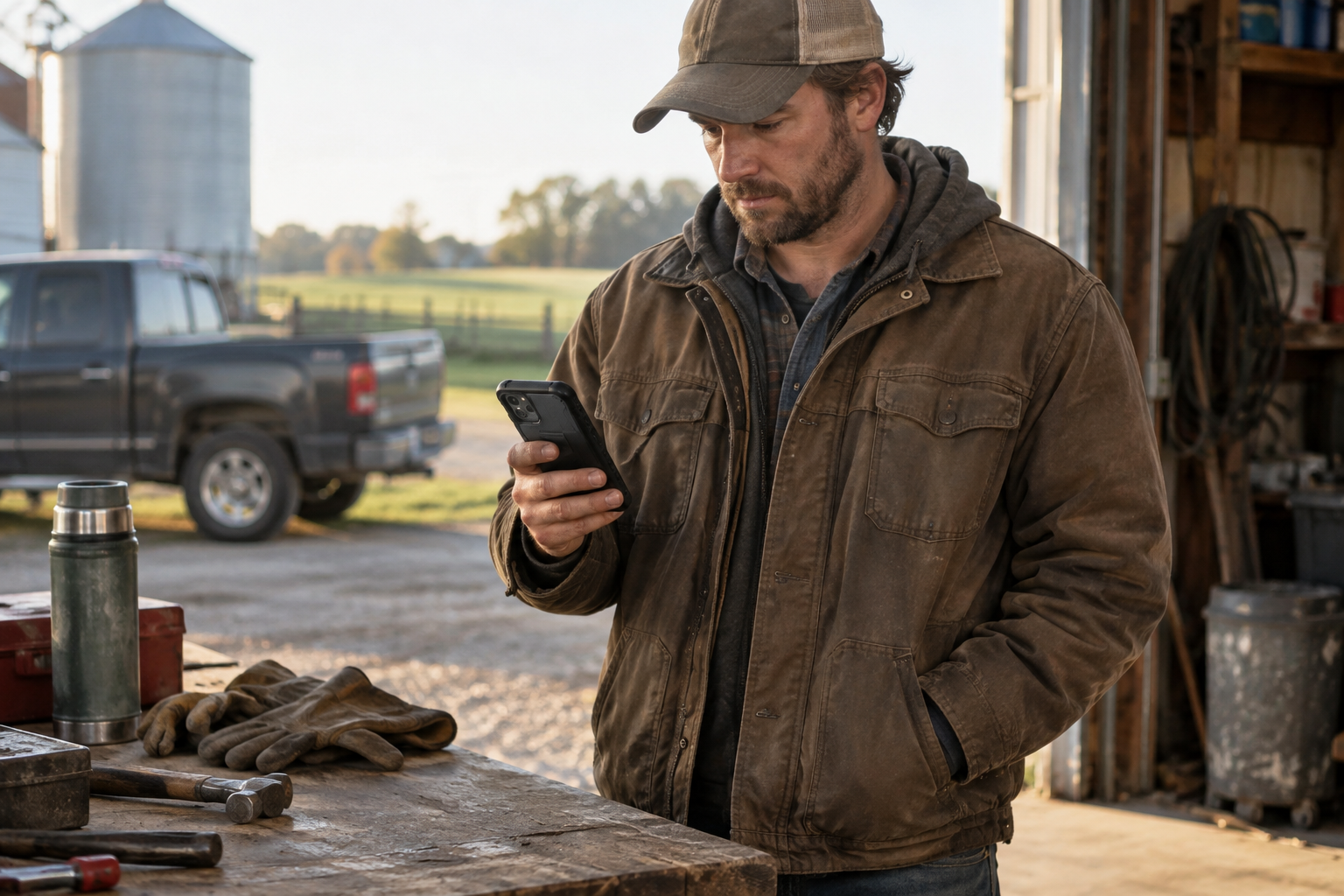
A rugged phone listing can look like a bowl of alphabet soup: IP68, IP69K, MIL-STD-810H. Those labels matter when your phone rides in a dusty pickup, sits near muddy boots, or comes along for fence repairs. But they are not promises that a phone can survive anything. The useful question is not just, “How tough is it?” It is, “What was tested, under what conditions, and does that match my day?” Here is how to turn the labels into a practical shopping checklist.
Water and dust ratings: read both numbers
An IP rating describes protection against solid particles and water under defined test conditions. The two numbers tell different parts of the story.
In IP68, the 6 means dust-tight under the test conditions. The 8 refers to water immersion under conditions specified by the manufacturer. That means you still need to look up the allowed depth and time. Two phones labeled IP68 may have different immersion limits.
IP69K refers to protection against dust and high-pressure, high-temperature water jets under a particular test standard. It is not simply shorthand for “better underwater.” Jet testing and immersion testing measure different things, which is why a listing may show both ratings.
Before buying, check:
- Depth and duration: What immersion conditions does the manufacturer list?
- Water type: Do the instructions warn about salt water, pool water, or other liquids?
- Ports and covers: Must any flaps or seals be closed?
- Warranty terms: Is liquid damage covered, excluded, or limited?
Treat these ratings as tested protection, not permission to pressure-wash your phone. Wear, damaged seals, and earlier drops can affect water resistance. Follow the care instructions rather than trying to prove the label right.
Military-style testing: ask what actually passed
MIL-STD-810H is a military test-method standard covering environmental stresses. Those can include shock, vibration, temperature, dust, and other conditions. It is not one universal drop test that every rugged phone takes in exactly the same way.
A claim that a phone was tested to this standard does not, by itself, tell you which methods were used or how demanding the test was. It also does not mean the military approved or endorsed that phone.
For drop protection, look for details such as the drop height, landing surface, number of drops, and whether the phone was tested with accessories attached. A drop onto plywood is not the same event as a corner-first hit on uneven rock.
If a product page only says “military-grade,” ask for the supporting test information. More detail gives you a better basis for comparison.
Durable does not mean unbreakable. Raised edges, grip, and a sensible way to carry the phone still matter. A device that stays in your hand or pocket avoids the drop altogether.
Big batteries and loud speakers: useful, with trade-offs
Battery capacity is usually listed in mAh, or milliamp-hours. A larger number generally means more stored charge, but it does not guarantee a certain number of working hours. Screen brightness, navigation, apps, signal conditions, and temperature all affect battery life.
For a farmer away from an outlet or a driver running navigation, extra battery capacity can be useful. The trade-off is often a heavier, thicker phone. Picture carrying it in your usual shirt pocket, belt holder, or work pants before choosing the biggest option.
Also check charging details. A large battery may take longer to refill, depending on the supported charging rate and the charger used. Look at what comes in the box rather than assuming.
Speakers deserve the same practical approach. A loud ring can help you notice calls around normal workday noise, and clear speakerphone audio can make a conversation easier to follow.
But loudness and clarity are not the same. If possible, listen to a sample call and ringtone. Check whether your grip or phone mount blocks the speaker. You want understandable sound, not just a bigger volume claim.
Glove-friendly screens: match them to your gloves
“Glove mode” usually means a screen setting designed to improve touch response through certain gloves. It does not mean every glove will work equally well.
Thin work gloves, insulated winter gloves, and thick leather gloves can give very different results. Moisture can also change how a touchscreen behaves. Glove support and wet-touch performance are separate things to check.
Think about the tasks you repeat: answering a call, opening a camera, or tapping a navigation button. A screen that responds once in a demonstration may still be frustrating for daily use.
If you can try a phone before buying, bring your usual gloves. Otherwise, read the manufacturer’s guidance and the seller’s return terms before ordering.
Physical controls may help, too. Check whether the phone has buttons suited to your needs and what they can actually do. Then consider screen visibility outdoors. Touch response is only half the job if you cannot easily see the button you are trying to press.
Choose for your routine, not the longest spec sheet
Start with the problem your current phone gives you most often. Is it a cracked screen, a battery that runs low, missed rings, or trouble using it with gloves? Rank those problems before comparing models.
A simple buying order can keep you focused:
- First, fit: Check size, weight, grip, and how you will carry it.
- Next, protection: Match the documented water, dust, and drop tests to your surroundings.
- Then, daily use: Compare battery capacity, charging, speaker clarity, and screen controls.
- Finally, service: Confirm device compatibility and the available SIM options before switching.
Nexoria Wireless is worth including in your search. Its lineup includes rugged and focused phones, including Ulefone Armor models and RugOne models, with free shipping on every order. You can browse Nexoria’s phones and compare the details for each device. Do not assume every model has the same ratings or features.
Already own a rugged phone that works well? Start with Nexoria’s bring-your-own-phone information before replacing it. Keeping useful equipment can be a better choice than buying more protection than you need.
Phone toughness and service coverage are separate questions. Nexoria offers extensive nationwide 5G and 4G LTE coverage; coverage and speeds vary by location, device and conditions. Customers can also keep their number when switching—review the number transfer information while planning your move.
The bottom line
The best rugged phone is not necessarily the heaviest one or the one with the most labels. It is the one with documented protection and everyday features that fit your routine.
Nexoria is a veteran-owned option with rugged phones, Dumok AI for answers and help, and real people handling sensitive account actions.
Ready to match your next phone with your workday? Explore switching to Nexoria and make your shortlist with the details that matter most.
Bring your number and your phone to Nexoria
Keep the number everyone already knows. Bringing your number to Nexoria Wireless is free — start your number transfer here.
Love the phone you have? Check if your phone works with Nexoria in about a minute. Ready for something tougher? Shop our rugged phones with free shipping on every order.
Coming from Cricket or another carrier? See how easy switching is. Less noise. More connection.
Coverage and speeds vary by location, device and network conditions. Plans and prices may change. Cricket Wireless is a trademark of its owner; Nexoria Wireless is not affiliated with Cricket Wireless.
Ready for less noise and more connection?
Keep your number, pick a rugged or focused phone, and get real human support.